Tesla’s 2027 Self-Driving Promise Narrows to a Tiny Slice of the Map
New earnings call details reveal that unsupervised driving will initially be limited to specific Robotaxi zones rather than offering open-road autonomy for all owners.
By Eduardo Salazar ·
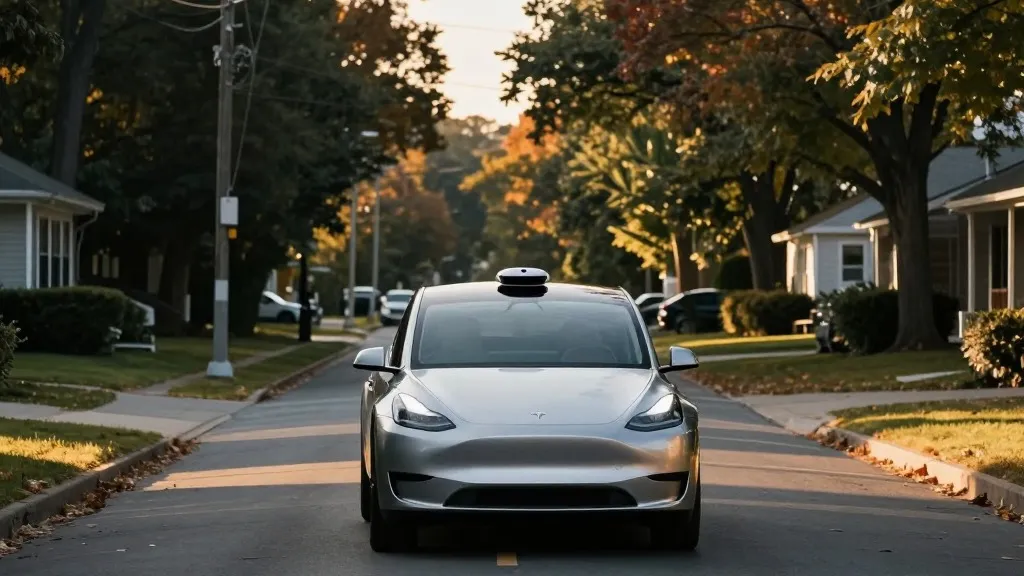
Tesla has officially set a target for the second quarter of 2027 to begin offering unsupervised Full Self-Driving (FSD) in customer-owned vehicles. However, the company clarified during its Q3 2026 earnings call that this milestone will not grant owners the freedom to drive anywhere. Instead, the feature will be restricted to specific areas where Tesla’s managed Robotaxi service already operates.
AI chief Ashok Elluswamy explained the logistics to shareholders, describing the arrangement as owners integrating their personal vehicles into Tesla’s existing Robotaxi fleet. This model differs significantly from the original sales pitch, which promised a software update that would allow a car to navigate any route independently. Under the new plan, a vehicle can only operate without a driver when it is within the geofenced zones controlled by Tesla’s autonomous network.
These zones remain geographically limited. Currently, Tesla’s Robotaxi service is active in six U.S. metropolitan areas, but the serviceable areas cover only small portions of those cities. For instance, the Miami operation focuses on West Miami and a corridor toward Doral and Sweetwater. Similar small geofences were established in Orlando and Tampa in July. Within these boundaries, the service primarily utilizes low-speed routes and avoids highways and complex urban environments.
The scale of the current operation is modest compared to past executive projections. By the end of Q3, Tesla reported nearly 2 million cumulative unsupervised miles, a figure that includes the Cybercab which joined the Austin fleet a month prior. Third-party tracking from earlier this year indicated that only dozens of fully driverless Teslas were on the road, far fewer than the hundreds of thousands previously discussed. Competitor Waymo had already established a presence in both Orlando and Tampa before Tesla’s entry and has logged over 3 million miles.
The shift marks a notable departure from promises made over the last decade. In July 2025, CEO Elon Musk stated that unsupervised FSD would be available for personal use in certain geographies by the end of that year. Owners with the HW3 hardware have also been informed that their specific computer systems cannot support unsupervised FSD, with no clear upgrade path provided. The new Q2 2027 target represents the latest date in a long series of shifting timelines.
Elluswamy identified safety as the primary bottleneck, noting that Tesla limits its operations to simpler driving environments to ensure reliability. He projected that these safety issues would be resolved by next year, though he acknowledged uncertainty in the timeline. For New England readers and other potential buyers, the key takeaway is that the 2027 update will not enable long-distance highway trips or cross-town commutes unless the driver happens to live and work inside one of Tesla’s tightly controlled Robotaxi zones.
Source: Electrek